
If talk of the wonders of kale is your cue for a giant eye roll, we get it. In the last several years, it may feel like the food world has been overtaken by curly green overlords intent on monopolizing every salad, grain bowl, and even… cocktails?
Here’s the thing, though: the fanfare around kale is well deserved. Not only are these veggies incredibly nutrient-dense, they’re low in calories, versatile in recipes, and may have a role to play in disease prevention.
Wondering what all the leafy green hype is about? Check out these seven benefits of kale.
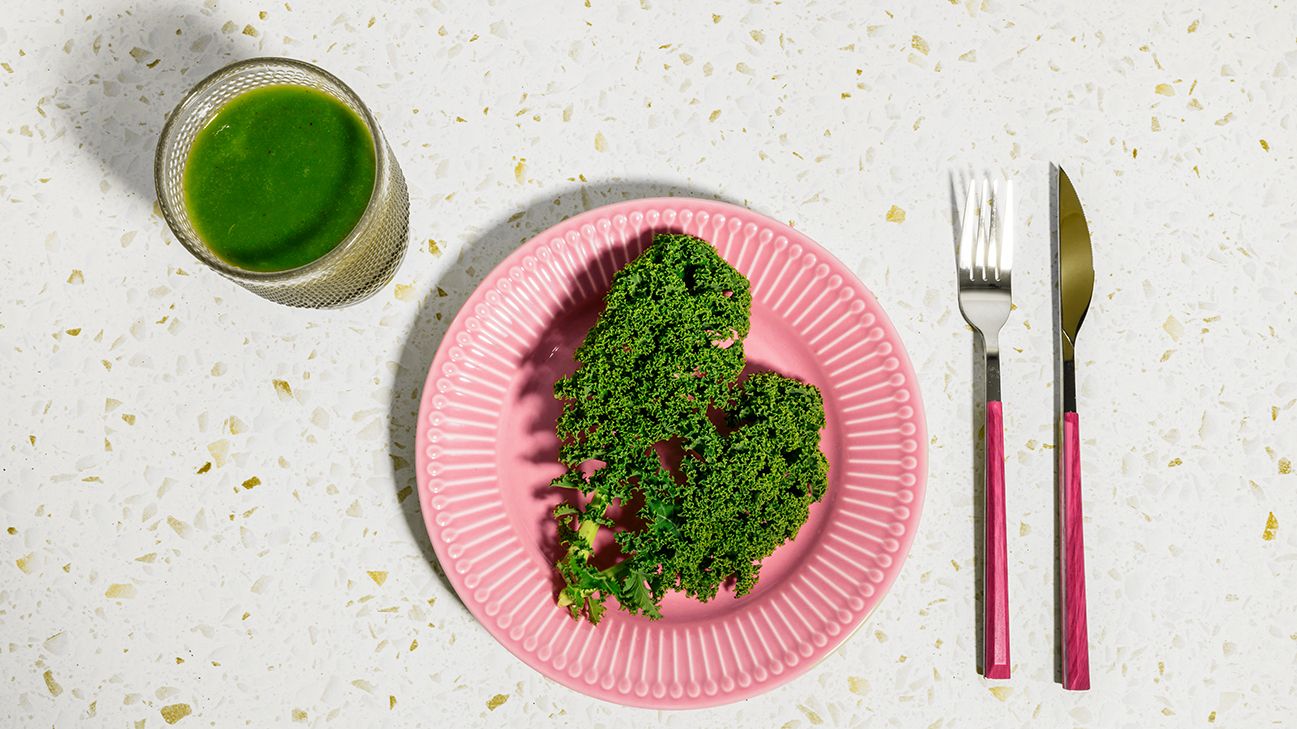
If you want to up the nutrition factor in your meals, you could hardly find a better choice than kale. It’s packed with several important nutrients including vitamin A and vitamin C. (Not to mention its off-the-charts levels of vitamin K and a smidge of iron, all wrapped up in an itty-bitty calorie count.)
These nutrients are critical to a lot of major functions in our bods. Vitamin A helps the immune system function and with vision, among other things. Iron helps form hemoglobin in red blood cells and helps moves oxygen through the body. Vitamin K helps with blood clotting and with bone health. Oh, and we’ll talk more about vitamin C soon enough. There’s a whole slew of useful nutrients in this leafy package.
The impressive roster of nutrients in 4.7 cups (100 grams) of raw kale looks like this:
Calories: 35
Protein: 3 grams (g)
Fat: 1.5 g
Carbohydrates: 4.4 g
Fiber: 4 g
Vitamin A (as beta carotene): 900 mcg RAE
Vitamin C: 90 milligrams (mg)
Vitamin K: 120 micrograms (mcg)
Iron: 18 mg
File under strange-but-true: Kale is part of the same family as cauliflower, broccoli, brussels sprouts, spinach, rutabaga, and even turnips. (Hey, we all have some quirky family connections.) These diverse veggies all fall under the umbrella of cruciferous vegetables — and the whole cruciferous crew has been broadly linked to reduced risk of cancer.
Researchers believe that sulfuric compounds in kale called glucosinolates trigger enzymatic reactions that help prevent cell damage (especially the type of damage that can lead to cancer). The anticancer potential of kale and other cruciferous veggies is currently linked to prostate, colorectal, lung, and breast cancer. We’ll likely learn more as research continues. Kale yeah!
Oh, these? They’re just a boatload of antioxidants, NBD.
Kale may seem rather humble, but it’s full of antioxidants, health-promoting compounds that help your cells deal with harmful free radicals, which can reduce the risk of disease.
In each single-cup serving, you’ll get a sizable dose of vitamin C, an antioxidant that improves iron absorption, promotes the synthesis of skin-plumping collagen, supports immune function, and might help prevent or delay certain cancers and cardiovascular disease.
Other antioxidants in the greens include quercetin and kaempferol. Quercetin has shown promise for its anticancer, antiviral, and antidiabetes properties, as well as potential for treating allergies and inflammatory disorders. Not to be outdone, kaempferol also appears to reduce risk of cancer and general inflammation.
You may not spent a lot of time thinking about your blood clotting… until an injury makes you grateful that it does. Without healthy clotting factors in the blood, even a paper cut could spell major trouble — so isn’t it good to know you can boost your body’s clotting ability via diet?
True to its “K” first initial, kale is an amazing source of vitamin K, a micronutrient necessary for proper blood clotting. If you want to make sure your vitamin K is A-OK, make kale a top contender in your salad- and smoothie-making.
Kale joins parsley, spinach, and egg yolk in an elite group of foods with the highest content of lutein and zeaxanthin, two antioxidants known for boosting eye health. (Pardon us while we daydream of a kale-spinach-parsley omelet… mmm.)
To break it down a bit more: Getting more of these antioxidants through food has been associated with reduced risk of cataracts and macular degeneration. Lutein and zeaxanthin are actually the main pigments in the yellow spot of the retina. Eating more of them in foods like kale helps protect the macula from damage and improves visual acuity.
Eating to take off extra weight doesn’t have to be all kale, all the time (as some health blogs might have you believe), but the salad superstars are definitely a friend to weight loss efforts.
First of all, kale’s calorie count is practically microscopic at a mere 8 cals per cup. In fact, most of its volume (almost 90 percent) comes from water, qualifying it as a low energy-density food. It’s also high in fiber which contributes to it’s satiety factor.
Water and fiber are a winning combination if you’re trying to manage your weight. Studies show that a diet rich in low energy-dense foods can help manage body weight. This also means you can feel more full on less calories (huge salad = hugely satisfied).
Meanwhile, kale is a palette for all sorts of healthy culinary combos — so using it as a jumping-off point for meals may help you make better-for-you choices. (As in, you’re way more likely to use it as a building block for salad than for brownies, no?)
Don’t ya just love the cruciferous family? Not only do kale and its veggie cousins help ward off cancer, research shows they’re also among the foods with the greatest cardiovascular benefits.
A 2018 review of studies suggested that kale and other cruciferous vegetables may have some of the strongest cardiovascular health benefits.
All that vitamin K we mentioned earlier might also have implications for your heart. A 2021 study on over 53,000 Danish citizens revealed that those who ate more foods high in vitamin K had significantly lower risk of cardiovascular disease.
Kale can be found in many different varieties, all of which can be used in the same way. One popular type is the curly version with silvery green leaves. Dinosaur kale (sometimes called Lacinato, cavolo nero, or Tuscan kale) is also a mainstay at farmers markets and some grocery stores.
Kale distinguishes itself from other greens by its particularly tough leaves, which is why many people prefer cooking it to break down its fibrous nature. One easy way to get started cooking with kale is to blanch and then pan-fry it in some olive oil, salt, and pepper. Or simply simmer on the stovetop until wilted.
While other greens turn mushy and loose flavor from overcooking, kale holds its shape and takes on a mildly sweet flavor. If you cook it in a pot with water or broth, some of its vitamins will leak out into the cooking liquid, creating a nutritious broth that’s great as a base for soups.
And while raw kale takes a dinosaur-strength jaw to chew (maybe that’s where dinosaur kale got its name?), massaging thin strips of the green with coarse salt or dressing breaks down the fibers enough to use as a more tender base for a rich and healthy salad.
To use the salt method, rub the greens with a handful of the coarse stuff and then rinse to remove the excess. When using oil and vinegar, just use enough to dress the salad.
This wonder-veggie does have one drawback: Like all greens, kale contains a small amount of oxalates, which can interfere with the absorption of calcium. Still, for most people, this is a minor negative. Unless you’re on a low oxalate diet (usually used to prevent kidney stones) you should be in the clear to enjoy kale in all its green glory.
And if you take calcium supplements, just take them a couple of hours before or after that kale-filled meal.
Getting kale all up in your meal plan
- Warm up on a chilly fall evening with a butternut squash, chickpea, and kale curry.
- Make guacamole even more nutritious with the addition of a few chopped kale leaves.
- Build a better breakfast by blending up a banana mango green smoothie bowl.
- Put the greens’ famous sturdiness to the test in a white bean, turkey, and kale soup.
- Give that juicer some air time! Make an immune-supporting kale juice.
- Mix up your dessert repertoire with kale-blueberry popsicles. (Don’t knock ’em till you’ve tried ’em!)
- Sample allll the greens in a summer salad with kale, cabbage, broccoli, and a zingy dressing.
- Crisp up some kale in the oven or air fryer to make kale chips.
