Dangerfood: Peanut Butter

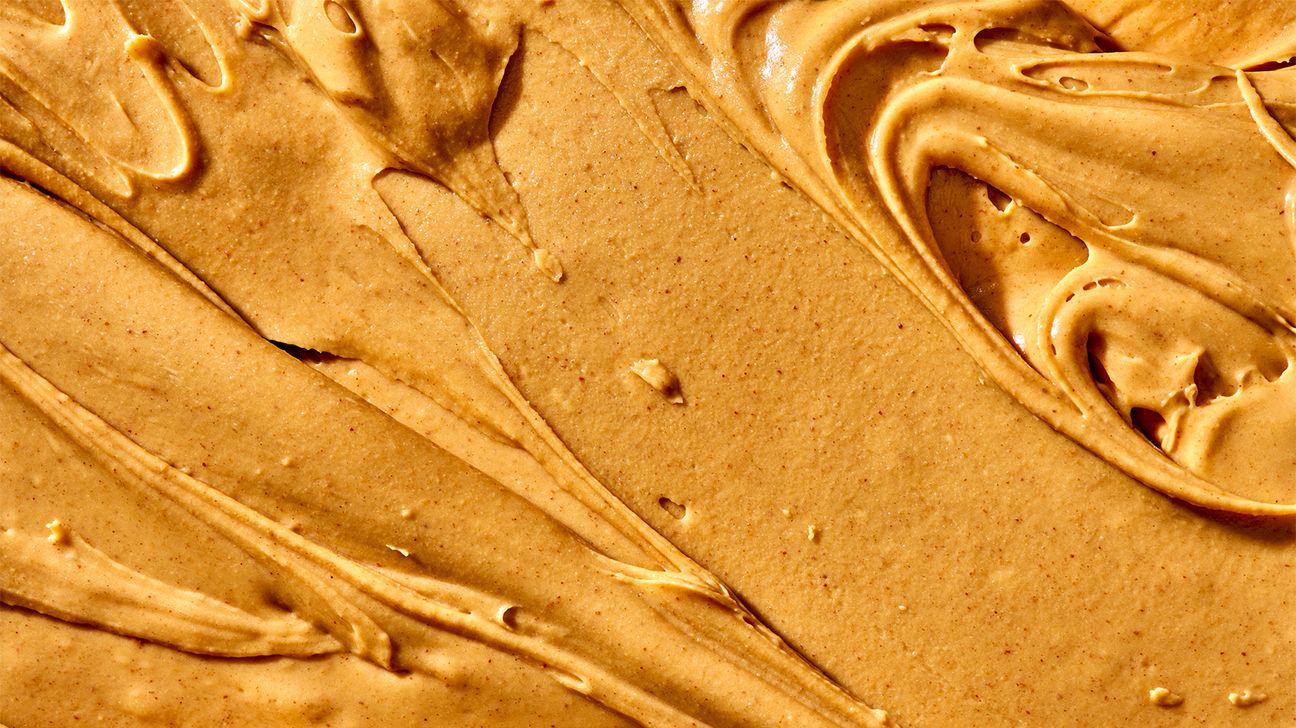
Peanut butter and jelly sandwiches seem pretty harmless, but what’s really lurking beneath the surface of that nutty paste that sticks to the roof of the mouth? The danger in peanut butter lies in its high calorie content and fats that may cause heart disease [1]— and the fact that it’s so darn hard to eat just one serving.

A Sticky Situation! – Why It’s Dangerous

Photo by Caitlin Covington

Peanut butter is considered an energy-dense food, meaning a small amount provides a high number of calories. One recommended serving (about two tablespoons) packs around 190 calories, 135 of which come from both saturated and unsaturated fats. But beware of the distinction: unsaturated fats are essential to a healthy diet and can help prevent cardiovascular disease, while saturated fats may increase the risk of heart disease [1] [3].

By themselves, peanuts are pretty innocent— it’s the process of turning them into butter that crosses into dangerfood territory. To make peanut butter, the nuts are roasted, cooled, shelled, and ground. When other ingredients like salt, hydrogenated vegetable oil, dextrose, corn syrup and honey are added, the trouble starts. They may make the peanut butter smoother and lengthen its shelf life— but at what cost?

Along with extra sugar, these added ingredients could mean the addition of trans fat. Trans fats are considered among the worst fats because they raise “bad” (LDL) cholesterol and lower “good” (HDL) cholesterol levels, possibly increasing the risk of heart disease [4]. Even if the label says, “zero trans fats,” it’s still possible to contain up to half a gram per serving. Look for “partially hydrogenated oil” listed as an ingredient— this could be a sign that the peanut butter contains this bad boy.

But peanut butter isn’t all bad— and those who eat it may even be healthier overall. One study found that tree nut and peanut consumption was associated with better overall diet quality and improved nutrient intakes [5]. Peanuts also contain vitamin E, protein, folic acid, and antioxidants, as well as monounsaturated and polyunsaturated fats (the “heart healthy” kinds) [6] [7]. An added bonus— it’s even been found to reduce the risk of type 2 diabetes in women [8].

Step Away From the Jar – Your Action Plan

Try sticking to one serving of peanut butter at a time— 2 tablespoons, or about the size of a ping pong ball— an amount some studies suggests has increased in recent decades [9]! We know it’s tempting to lick peanut butter straight from the spoon, but beware— when the tongue is doing the talk-, err, licking, it’s hard to know when to stop.

If peanut butter isn’t a favorite, try these alternatives made from lower-fat nut options. Some good options are almond butter, which is slightly sweeter than peanut butter and contains more calcium and fiber, or soy nut butter, which has fewer calories than peanut or almond butter, supplies soy protein, and contains less fat than other butters.

We’re not saying cut out the peanut butter completely – imagine a childhood without peanut butter and jelly (the average American child eats 1,500 P&J sandwiches before even graduating from high school)! The main thing to remember: stick to one serving size of peanut butter to reduce calories and cholesterol-raising saturated and trans fats.

31

Works Cited

  1. Dietary fats and cardiovascular health. Carrillo, Fernandez L., Dalmau, Serra J., Martinez, Alvarez JR, et al. Centro de Salud La Victoria de Acentejo, Santa Cruz de Tenerife, Sociedad Espanola de Medicina Familiar y Comunitaria, Spain. Anales de Pediatria. 2011 Mar;74(3):192.e1-16. Epub 2011 Feb 23.
  2. Dietary fats and cardiovascular health. Carrillo, Fernandez L., Dalmau, Serra J., Martinez, Alvarez JR, et al. Centro de Salud La Victoria de Acentejo, Santa Cruz de Tenerife, Sociedad Espanola de Medicina Familiar y Comunitaria, Spain. Anales de Pediatria. 2011 Mar;74(3):192.e1-16. Epub 2011 Feb 23.
  3. Dietary fat consumption and health. Lichtenstein, A.H., Kennedy, E., Barrier, P, et al. Tufts University, Boston, MA 02111-1525, USA. Nutr Rev. 1998 May;56(5 Pt 2):S3-19;discussion S19-28.
  4. The negative effects of hydrogenated trans fats and what to do about them. Kummerow, FA. Department of Bioscience, University of Illinois, Urbana, 61801, United States. Atherosclerosis, 2009 Aug;205(2):458-65. Epub 2009 Mar 19.
  5. Tree nuts and peanuts as components of a healthy diet. King, J.C., Blumburg, J., Ingwersen, L., et al. Children’s Hospital, Oakland Research Institute, Oakland, CA 94690, USA. J Nutr. 2008 Sep;138(9):1736S-1740S.
  6. Health benefits of nuts: potential role of antioxidants. Blomhoff, R., Carlsen, M.H., Anderson, L.F. Department of Nutrition, Institute of Basic Medical Sciences, University of Oslo, Oslo, Norway. Br J Nutr. 2006 Nov;96 Suppl 2:S52-60.
  7. Protective effect of monounsaturated and polyunsaturated fatty acids on the development of cardiovascular disease. Aguilera, C.M., Ramirez-Tortosa, M.C, Mesa, M.D., et al. Nutr Hosp. 2001 May-Jun;16(3):78-91.
  8. Nut and peanut butter consumption and risk of type 2 diabetes in women. Jiang, R, Manson, JE, Stampfer, MJ, et al. JAMA. 2002 Nov 27;288(20):2554-60.
  9. Food portions are positively related to energy intake and body weight in early childhood. McConahy, K.L, Smiciklas-Wright, H., Birch, L.L. Departments of Nutrition and Human Development and Family Studies, The Pennsylvania State University, University Park, PA, USA. J Pediatr. 2002 Mar:140(3):340-7.

Comments Leave a comment

Laura

Check out the brand "Better N Peanut Butter." They make a really creamy whipped peanut butter that's 100 calories per serving. I think it actually has a better consistency than regular peanut butter due to the lightness, and it's much healthier!

trajayjay

Ah no they take out all the healthy fats and replace it with sugar and syrup. Guys! Fat is not bad for you (if it's unsaturated). I know the media has done an excellent job of convincing us that fat is a dietary demon but it's not. Most of the fat in peanut butter is unsaturated, which is healthier for your heart. We need fat in our diets (20-35% of our calories). We need it for hormone production and to absorb certain vitamins. It also helps add flavor to food so you don't fill up on refined sugars to satisfy a craving that would have been met with a little fat. Yes, fat is higher in calories, but why does high calorie mean unhealthy? Don't fear (unsaturated) fat, Don't fear peanut butter. Of course don't eat half the jar, but feel free to get the benefits of its healthy fats, protein, and vitamns by spreading 1-2 tablespoons on toast, sans guilt.

Davidsorrell

What about the peanut butter that you grind at the store? Nothing is added, its just roasted peanuts.

esotericrealm

Should be much better

Aylin

regardless of its form, peanuts are perhaps the most mucus-forming foods in the world. peanuts are more often times than not moldy -- roasted or raw. 

esotericrealm

Common peanut like kraft will contain artificial products so its really difficult unless you go to a health food shop but even process peanut butter isn't the best....

ZullaT

I quite like pb2, or powdered peanut butter. It's supposed to have had the majority of the fats squeezed out of peanuts during processing and just contains a tiny bit of extra salt and sugar. I use it to amp up the protein and flavor of my morning oatmeal. I also buy natural peanut butter that contains only peanuts. It's kind of gross to stir up, but it will stay together in the fridge depending on the brand. In short: peanut butter rocks!

trajayjay

@ZullaT Hmmm, i never had a problem with stirring any of my nut butters. I made them in my magic bullet. Maybe I just ate them too fast for the oil to separate out.

Nick Goodall

It's a shame that nuts do have such a high fat content.. I've yet to try Almond Butter though, I'll have to do that soon!

trajayjay

@Nick Goodall It's not a shame that nuts are high in fat. Nuts are high in unsaturated fat, which is different than the fats found in animals. These fats are shown to help ward off cancer and heart disease, but they taste pretty damn good too! Don't fear the fat. You need some in your diet to absorb vitamin a,e, d, and k.

Nick Goodall

@trajayjay Haha I'm aware of that, but whether it's unsaturated or saturated, they'll both pile on pounds. Yes, they are needed for the assimilation of vitamins, but it doesn't mean I can go and eat 500g of cashews, which is why it's a shame :(

trajayjay

I think what you mean then is that it's a shame that fat is high in calories. Again, i have to disagree with you. Maybe it's a shame for you personally but for a body builder or a young athlete, they could really use the extra calories. This is why i don't base the healthiness of food by its calories. The real shame is that is what this whole website seems to do: judge a good by its calories

sstahlman

So what you're saying is that it's not peanut butter that's a dangerfood. It's overly processed peanut butter - making the solution easy! Just look at the ingredient label and if there's anything on it besides peanuts (and salt if desired), don't buy it. In other words, look for the jars with oil as the top layer (even Smuckers has some!) or hit up a health food store and grind it yourself.

trajayjay

@sstahlman Yes! Peanuts ground into a paste offer a nice dose of healthy fats (yes, such a thing does exist), some protein, and flavor. But when manufacturers pump loads of sugar, partially hydrogenated oil (trans fat), and a whole bunch of other stuff it loses its charm

LucyFeltonBanta

How about if you purchase the all-natural, ground peanuts only and the drain off the layer of oil that forms on top? Also, I've tried the Better n Butter, but I'm concerned about the ingredients (peanut flour??).

Kate Morin

@LucyFeltonBanta Hmm... I'm not sure about draining off the layer of oil on the top — I suppose if you can get it to work, go for it? As for Better n' Butter, peanut flour shouldn't cause too much worry (it's essentially just ground up peanuts — same as almond flour, coconut flour, rice flour, etc.), but it DOES contain some other totally unnecessary ingredients (all sorts of syrups (aka sugar) and thickeners) that you can easily avoid. A good substitute if you want lower fat peanut butter is using a powdered peanut butter product like "PB2," which you mix with water or milk until it's peanut butter consistency (and the only ingredients in that stuff are roasted peanuts, a liiitttle bit of sugar, and salt). Hope this helps!

TerriWickstrom

where can you buy PB2 at?  Thanks, Terri

Kate Morin

@TerriWickstrom I know you can buy it online on their website or on Amazon, but they also have a handy dandy store locator on their site here: http://www.bellplantation.com/locator/! I've actually never tried it, but I have friends who love it!

LucyFeltonBanta

@ksmorin @TerriWickstrom great news, I will definitely give this a try! Thank you.

kristy2102

I saw it at Whole Foods.

LucyFeltonBanta

@ksmorin Just bought some of the PB2 . . . I'll report back when I try it (kind of nervous).

Kate Morin

@LucyFeltonBanta Ah! Let me know how it is! (And don't hate me if it's awful :) ).

LucyFeltonBanta

@ksmorin It's good! Had it for breakfast this morning with an apple. Very tasty and very peanuty. Thumbs up.

trajayjay

@LucyFeltonBanta Don't get bnpb. Almost always when the fat from a product is removed, sugar and worthless fillers fill the void. You're better off with homemade peanut butter

kristy2102

What is you just make your own peanut butter? From raw peanuts?

Kate Morin

@kristy2102 That's not a bad alternative!

Kate Morin

@kristy2102 That's not a bad alternative! Here are a few others for ya, too :) 
http://greatist.com/health/healthy-alternatives-peanut-butter/

kristy2102

@ksmorin Ooooh! Thanks!! :)

trajayjay

@kristy2102 Then it will have no sugar and no trans fat, and will be full of protein, healthy fat, and vitamin E. I'd say that's a win win wouldn't you

kristy2102

Sorry, what if. Not what is. lol.

Pages

Create new account

Latest Greatist