
We include products we think are useful for our readers. If you buy through links on this page, we may earn a small commission. Here’s our process.
Greatist only shows you brands and products that we stand behind.
Our team thoroughly researches and evaluates the recommendations we make on our site. To establish that the product manufacturers addressed safety and efficacy standards, we:- Evaluate ingredients and composition: Do they have the potential to cause harm?
- Fact-check all health claims: Do they align with the current body of scientific evidence?
- Assess the brand: Does it operate with integrity and adhere to industry best practices?
Yep, you can indeed drink distilled water! And it’s a popular choice for people who are super-conscious about drinking the best, most beneficial type of water they can. But in the eternal battle of distilled water versus purified water, who’s the winner?
Distilled water vs. purified water: A quick breakdown
Even though distilled and purified water might seem pretty similar on the (watery) surface, they have a few differences you might want to consider.
Distilled water
It’s:
- free of contaminants ✅
- great for people with reduced immunity like those with HIV or cancer ✅
- free of additions such as chlorine ✅
But it’s also:
- devoid of those good, tasty minerals (since distillation removes 99.9 percent of them) ❌
- not the tastiest ❌
Purified water
It’s:
- great for people living in areas with poor public water quality ✅
- free of heavy metals, which can lead to stomach issues or even brain damage ✅
- super tasty ✅
But it’s also:
- devoid of that handy fluoride ❌
- pretty expensive to make, with a constant need to buy filters ❌
- wasteful, whether you’re buying it in plastic bottles or disposing of used filters ❌
On the surface, they’re pretty similar.
- Purified water has had chemicals and contaminants removed but may contain minerals.
- Distilled water takes it one step further, with both contaminants and minerals removed.
But which is better? In the blue corner, it’s distilled! And in the other blue corner, it’s purified! They’ll be facing each other in a battle of facts! Seconds out. Round one!
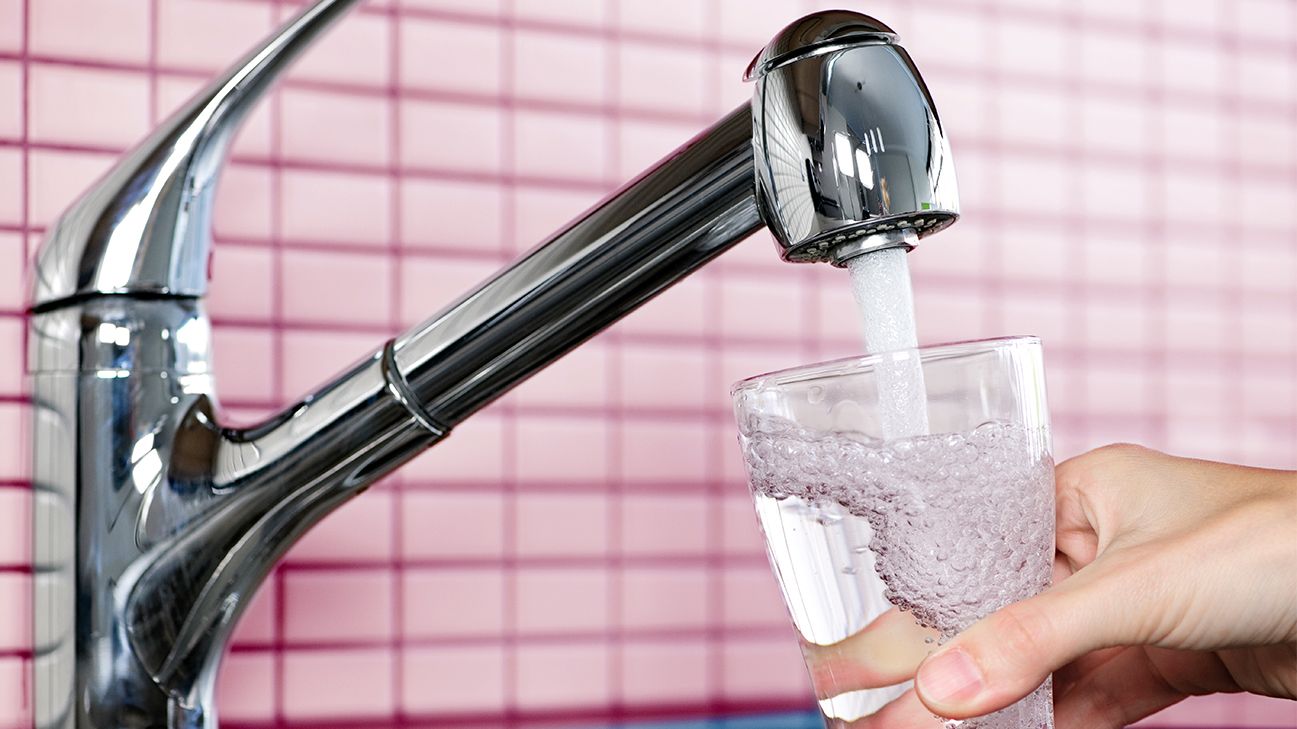
Basically, distilled water is purified water that has taken a further step into purity, like when a monk becomes the Pope.
Purifying water gets rid of all the stuff you probably don’t want to be drinking: heavy metal traces, chlorine, and chemicals that make your tap water taste vaguely like that time you accidentally swallowed a mouthful of the swimming pool. But it keeps the minerals that help you stay healthy.
Distilled water says, “Hold up. I don’t want any of this!” and gets rid of pretty much everything. No chemicals, no nasty tastes — but no good stuff, either.
How is distilled water made?
Distilled water is made through the process of (surprise!) distillation.
As you may remember from high school science projects, that’s the one where you boil water and collect the steam, which then cools and turns back into water. If you distill water that has already been purified, the result is a distilled water purer than a basket of week-old kittens.
As a result, distilled is the water of choice for medical facilities and labs — the gold standard for good clean liquid. It’s purer than a nunnery. But does that mean you should make a habit of drinking it?
Can you drink distilled water?
Because it’s used in medical settings and labs, you might assume distilled water is undrinkable. Wait — they use it in labs? Is this safe? Am I going to grow a second head?
No need to buy extra hats and sunglasses: Distilled water is completely drinkable. It’s not as common a beverage as purified water, but the option is absolutely there!
However, there are pros and cons, which we’ll dive into below.
Pros and cons
Distilled water being ultra-pure certainly sounds cool. But surely there’s some kind of catch? Yup. Nothing in life is that simple, is it?
Pros
- It can be better for you than tap water if you live in an area with contaminated water.
- There’s zero chance of chugging down any contaminants in your water.
- It may be beneficial for people with HIV or cancer whose immune systems don’t fight infections effectively.
- Distillation gets rid of that nasty chlorine taste. Boo, chlorine!
Cons
- It’s pure, clean water, but it can be a little too pure, with absolutely no healthy minerals.
- You need to give extra care to your teeth, because you won’t be getting fluoride from tap water.
FYI: If distilled water is your main source of hydration, you’ll need to eat plenty of mineral-rich foods or take supplements to make sure you’re meeting your daily mineral needs. Drinking a lot of distilled water isn’t a good option unless you can make up for the minerals removed from the water.
Common uses
Distilled water ain’t just for drinking and lab work — it actually has a whole bunch of uses. You can use it:
- in a steam iron
- in aquariums (though your fishy friends will need a mineral supplement, same as you)
- in continuous positive airway pressure (CPAP) machines, which help with sleep apnea
- in car cooling systems
- for watering plants
Can you make distilled water at home?
You can indeed!
Distillation kits are available online. If you’re feeling really smart, you can even do it yourself using:
- a large pot of boiling water
- a bowl
- some ice cubes
Which method you go with really depends on what you’re going to use the water for. Just using it for some ironing or cleaning? You can probably use a pot. But if you’re going to be drinking it or filling an aquarium, you’re going to need quite a lot of water.
It might be best to go with the distillation kit instead.
Is distilled water good for babies?
Mixing distilled water with baby formula is a pretty good idea: You’re giving your little one pure, uncontaminated water with no risk of nasty chemicals, and they’ll get all the minerals they need from the formula itself.
Just remember to give them regular water once they’re off the baby formula, because Junior needs those nutrients that the distillation process takes out.
Purified water is usually made with groundwater or tap water. It goes through filtering to get rid of impurities like:
- bacteria
- algae
- fungi
- parasites (eww)
- traces of metals like copper and lead
- chemicals
Purification techniques
There are a few different ways to make purified water:
- Reverse osmosis. Water gets filtered through a spiffy material that lets the water through but blocks salt and impurities like that bouncer at the club.
- Deionization. This is the method most likely to appear in a spelling bee. It removes the molecules of salt and impurities from the water.
- UV radiation. It’s not as scary as it sounds.
- Good old-fashioned boiling. It turns out impurities don’t like being boiled. Who knew?
How to purify water at home
At entry level, it’s super easy to purify your water at home. All you’ve got to do is go out and buy a Brita water filter, and it’ll do the hard work for you!
The problem is that you can only really use the pitcher for smaller amounts. What if you want all your water to be purified?
Well, good news again! If you’re willing to spend the coin, you can have a home filtration system set up. This means the very water coming out of your faucet will be purified for you.
These systems can get pricey but might be worth your while. Make sure any system you have installed comes with certification from the American National Standards Institute (ANSI) or NSF International.
Pros and cons
What are the ups and downs of purified water? Check it out!
Pros
- Purification improves your tap water, especially if you live in a state with lower water standards.
- It tastes pretty darn good.
- It can be relatively simple to make.
Cons
- Purification removes the fluoride from tap water, and you need fluoride to prevent tooth decay.
- Sometimes, purification doesn’t get all the contaminants out, especially compared with distillation.
- Water filtration systems need a lot of upkeep to make sure they work properly.
Water quality and health: Why it matters
Remember all those fun science books you had as a kid that told you your body is mostly water? Welp, it’s completely true: You’re 75 percent water. Taking in a constant flow of water is essential for living.
That means you want to make sure the water you’re taking in is of good quality. Good water flushes out toxins, keeps you hydrated and perky, and helps with digestion and weight loss. Bad water can make you feel sluggish, dry out your skin and hair, and make you sick. Boo.
Good water quality is essential if you want to live your best life. Plus, it means a lot less limescale buildup on your humidifier!
We’ve reached the final battle between distilled and purified water. Who will emerge victorious?
Well, it comes down to personal choice, really. But take a look below to see which one might work best for you.
| Distilled | Purified |
| Distillation is super effective at getting rid of any additional junk in your water. | Purification gets rid of impurities and bacteria in your water but keeps the healthy minerals. |
| It’s brilliant for immunocompromised people. | It tastes fresh and pure. |
| It has a ton of uses around the house. | It’s pretty simple to make at home. |
| You can mix it with baby formula. | It’s awesome for hair, skin, and digestion. |
So the battle of purified versus distilled water has ended in a draw… but what’s this? Distilled water is coming back out of the blue corner and demanding to take on some other challengers!
Here come mineral water and spring water. And purified water still wants some of this action! How do they all measure up?
Spring water vs. distilled water
Spring water generally comes from an underground source and doesn’t pass through any treatment facilities. It’s just bottled right there and then. So it’s just as pure as distilled water but has a ton of nutrients in it.
Make sure you check labels carefully, though — some bottles are labeled as spring water but are actually just treated tap water. Sneaky!
Mineral water vs. distilled vs. purified
Just like spring water, mineral water comes from an underground source and is protected from any potential pollution. The difference is that spring water naturally rises to the surface and mineral water remains underground until it’s tapped.
The battle of purified versus distilled water will probably rage on forever. But if you’re jonesing for that extra-pure refreshment and wondering which you should choose, it just comes down to personal choice.
Yeah, yeah — nobody likes a draw in a fight. We get it. But distilled and purified really are suited to different situations. For example, distilled water can be perfect for mixing with baby formula. But as soon as your kiddo is on solids, it’s no longer a good choice.
Consider your needs or consult a medical professional to see which type of water would be best for you. Choose the right one and you’ll be the winner.
