
We include products we think are useful for our readers. If you buy through links on this page, we may earn a small commission. Here’s our process.
Greatist only shows you brands and products that we stand behind.
Our team thoroughly researches and evaluates the recommendations we make on our site. To establish that the product manufacturers addressed safety and efficacy standards, we:- Evaluate ingredients and composition: Do they have the potential to cause harm?
- Fact-check all health claims: Do they align with the current body of scientific evidence?
- Assess the brand: Does it operate with integrity and adhere to industry best practices?
Are you hard-pressed (French pressed, that is!) to pledge your allegiance in the matcha vs. coffee debate?
Those who love matcha say it offers all the greatness of coffee without the jitters and post-caffeine crash. It also packs a number of health benefits (antioxidants FTW).
But before you take the side of matcha or coffee, here’s what science has to say about both beloved beverages.
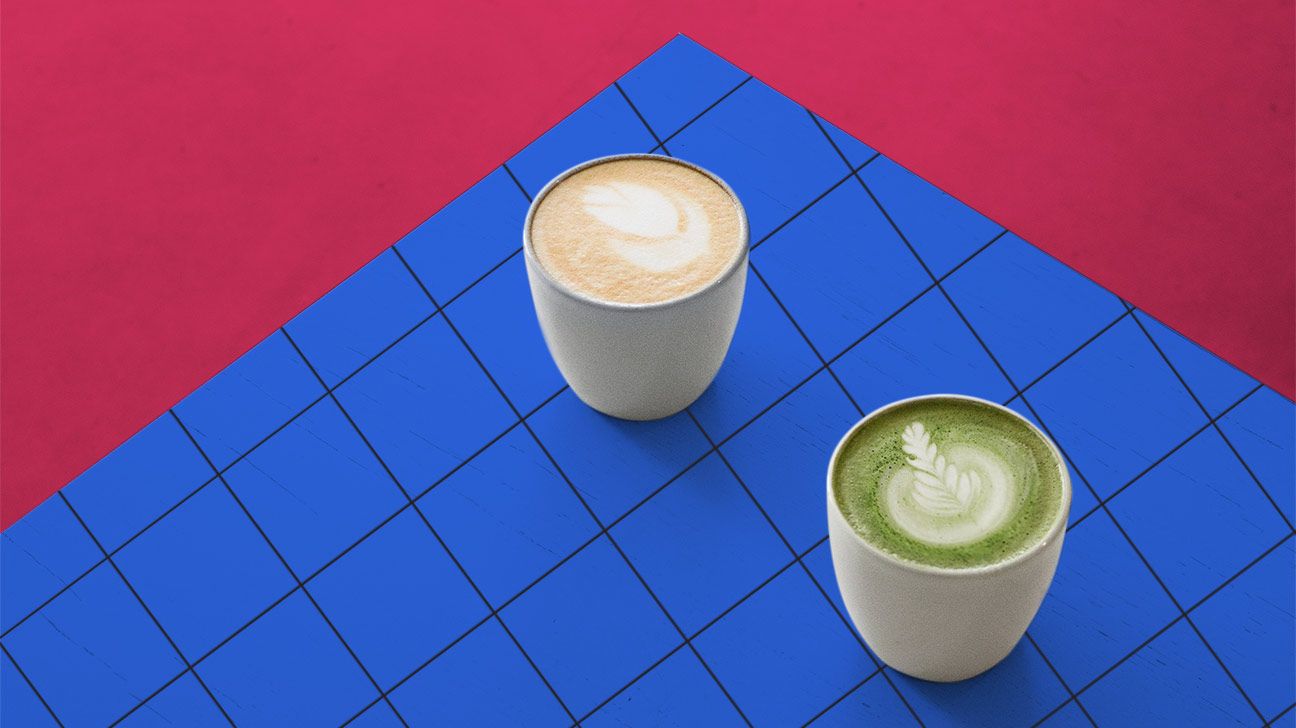
Coffee doesn’t exactly grow on trees, but it does come from a flowering shrub called the coffea plant. The delish coffee beans you grind up and brew are actually roasted seeds from the plant’s fruit.
As many of us know, there are about a million ways to make coffee, ranging from a simple pour-over to a fancy espresso machine.
Matcha, meanwhile, comes from green tea leaves from the Camellia sinensis tea plant. Unlike regular green tea, matcha is crafted by grinding the leaves into a superfine powder.
When making matcha, no fancy grinding machine or espresso maker is required. Simply mix the powder with boiling water and voila!
Matcha on its own has a bold taste, but instead of coffee’s bitterness, it’s more of an earthy, botanical flavor. Like coffee, matcha’s not always love at first sip — most people find it’s an acquired taste, especially without the help of some sugar or cream.
Healthwise, both bevvies contain antioxidants that provide a slew of benefits. Coffee typically has more antioxidants than black or green tea, at 200 to 550 milligrams per cup. But matcha contains 3 times as many antioxidants as green tea, which makes it the clear antioxidant winner.
To break it down a little more, here are some other key differences between the two brews:
| Coffee ☕️ | Matcha 🍵 | |
| Plant origin | coffea plant seeds (coffee beans) | fine-ground green tea leaves |
| Taste | bitter, acidic | “green” or botanical |
| Prep method | brew grounds with coffee machine of choice | mix powder with boiling water or steamed milk |
Rely on your midday latte to get you through that afternoon slump? When you switch to matcha, you could get a similar energy boost without crashing and slumping over your keyboard 3 hours later (been there 🙋♀️).
A cup of coffee has 80 to 100 milligrams of caffeine, which starts pumping through your bod practically immediately.
A cup of matcha made with 1 teaspoon of matcha powder typically has 60 to 80 milligrams of caffeine. But people often use smaller amounts of matcha, so you’re looking at more like 30 to 40 milligrams of caffeine if you use only 1/2 teaspoon of powder.
So, depending on how much matcha you use, this green pick-me-up’s caffeine content can rival that of a weaker cup of coffee. But typically a full-strength coffee will beat out matcha.
The way the caffeine hits you may also be different. Matcha contains phytonutrients like L-theanine, which helps your body process the caffeine more gradually. As a result, a cup of matcha tends to provide energy without the jitters, racing heart, headaches, or insomnia that coffee might cause.
tl;dr
Coffee is usually the winner when it comes to caffeine. If you use the traditional 1/2 teaspoon of matcha, you’re looking at about half the caffeine content of coffee. Matcha also tends to leave you energized longer and comes with less of a crash.
If you’re looking to maintain a healthy weight, matcha might be a better morning friend than coffee. While there’s not much research so far on matcha specifically, some studies have suggested a link between green tea leaves and weight loss.
One 2013 review noted that many studies have found positive effects of green tea extract on fat metabolism, both during exercise and at rest. This might be due to the antioxidant epigallocatechin gallate (EGCG), which green tea contains. But all these findings are from animal studies. More research on humans is needed to confirm the effects.
Scientists think EGCG might also reduce inflammation and boost weight loss.
Still, the research is inconclusive. One 2014 review found that adults with overweight or obesity who drank green tea preparations regularly for 12 weeks did not have significant weight loss compared to the control group.
Coffee, meanwhile, may have fat-burning benefits of its own, mostly thanks to caffeine. A 2019 study suggests caffeine might boost the functioning of brown fat (the “good” body fat we all need), which may contribute to weight loss.
Further research found that drinking 4 cups of coffee per day for 24 weeks was associated with a slight weight loss (about 4 percent) as compared to drinking no coffee. But again, scientists think this is due to caffeine, which is also found in matcha in slightly smaller amounts.
tl;dr
Matcha has more health-boosting antioxidants than coffee, but it remains unclear just how much either beverage could affect your weight.
Been sleeping on the matcha trend? It’s def not too late to join the matcha par-tea. But before you go and order it in bulk, here are the basic benefits.
What caffeine crash?
The phytonutrients in matcha help your body process caffeine more slowly than you would when drinking coffee. That means more energy for longer — without the crash.
If you struggle with ups and downs associated with caffeine, matcha might provide a more even energy boost.
No mo’ coffee breath
If you’ve ever made out right after a cafe date, you know it all too well: Coffee breath is a thing. Matcha might be a friendlier alternative to sip on before your next smooch sesh. The catechins in matcha help prevent plaque-causing bacteria from sticking to your teeth.
As a result, switching to matcha might reduce tooth staining and unwelcome bouts of halitosis. Overall, green tea and matcha are believed to be more beneficial to oral hygiene.
Antioxidant-rich
Matcha’s known for being an antioxidant powerhouse. Since it has more antioxidants than coffee, you can count on this green drink to contribute to a hefty antioxidant count.
Matcha specifically contains catechins, a type of antioxidant known to slow signs of aging and fight cancer, and EGCG, an antioxidant associated with brain health benefits.
A diet rich in antioxidants is linked to a reduced risk of many diseases, including certain cancers and heart disease.
Radiant skin, bb
The skin care world seems to be turning green with matcha and green tea masks, creams, and lotions of all kinds. But you might not even need to cover your face in a green sheet to reap the benefits. Simply drinking the stuff could help clear your skin from the inside out.
According to a 2017 review, the antioxidant EGCG in green tea can be used both topically and orally to treat acne and oily skin. This is thought to be due to EGCG’s antimicrobial, anti-inflammatory, and free radical-fighting properties.
Quick and easy FTW
Forget your Keurig — making matcha is simpler than even the laziest coffee maker on the market. No need to grind, drip, or filter.
Simply mix with boiling water and it’s ready in a few minutes.
Here’s a match(a) made in heaven: your fave mug and matcha tea. If you’re not sure where to start, we’ve got your back with a couple tasty recipes.
Get steamy: How to make a hot cup o’ matcha
Ingredients
1 teaspoon matcha green tea powder
1 teaspoon sugar (or honey)
3 tablespoons boiling water
1 cup hot/steamed milk (or milk alternative)
Directions
- Spoon matcha green tea powder (from your local grocer, market, or online) and sugar into a mug.
- Add boiling water and mix with a spoon or whisk until it turns into a smooth, deep-green paste (no clumps).
- Heat milk in a saucepan and pour it into the mug until full.
- Whisk the paste and milk together until it takes on a creamy, light green texture. Enjoy!
Optional: Sprinkle some matcha powder on top for Insta-worthy decoration.
Ice, ice baby: How to make your matcha cold
Ingredients
1 teaspoon matcha green tea powder
Splash of water
1 cup cold milk (or milk alternative)
1–2 teaspoons honey (vegans: sub agave syrup)
Directions
- In a sturdy glass jar, mix matcha powder with a splash of water — just enough to make a paste. Stir it up until it’s smooth and clump-free.
- Add milk and honey to taste. Cover with a tight lid (srsly — make sure that baby won’t fly off) and shake vigorously until fully mixed.
- Let sit for a minute. Some green clumps will fall to the bottom.
- Pour the rest into a glass with ice and drink up!
So, why exactly is this pistachio-hued beverage taking over coffee mugs everywhere? And should you ditch your cup of joe and hop into the matcha mobile too?
Maybe. Here’s the pro/con breakdown:
Matcha vs. coffee: The good
- Healthy AF: Matcha packs a decent antioxidant punch.
- Slow and steady FTW: Unlike coffee, matcha contains phytonutrients that help your body process the caffeine more slowly and steadily. This can lead to a calmer buzz without the jitters and crash sometimes associated with your regular roast.
- Easy to prep: Making matcha is so easy, you can prob do it while you practice those face yoga exercises you learned on TikTok. Simply boil water, mix, and drink up.
Matcha vs. coffee: The bad
- Less caffeine: Some people may not love that matcha can contain less caffeine per cup — sometimes just half as much as coffee. If you want a more intense boost, you’ll need to down a bit more of the green stuff.
- Acquired taste: Some aren’t up for the earthy vibes matcha presents to your taste buds. And yeah… drowning your drink in sugar might make it taste delish, but it isn’t ideal for your health.
- Pricey: Buying quality matcha will set you back more than a bag of coffee.
Basically, the choice to chug coffee or mix up some matcha is personal. You do you.
