11 Ways Alcohol Is Actually, Legitimately Healthy [Pics]

Alcohol doesn't make a lot of "Top 10" lists for being one of the healthiest things to put in our bodies. But alcohol in all of its common forms — beer, wine, liquor — actually has some unexpected health benefits like strong hearts, sharper brains, and uninhibited creativity.

So great, let's get smashed! Right? The key with alcohol and all of the benefits listed below is to consume in moderation. So, um, don't get smashed — enjoy responsibly. Drinking too much can result in serious negative heath effects including poor liver function, liver disease, high blood pressure, weight gain, and changes in the brain's ability to produce new cells [1].

Dust off the bottle opener or corkscrew and get ready to crack one drink per day (for women), or maybe even two (for men) to get these sweet alcohol health benefits without the hangover.

Alcohol's Health Benefits

1. Get a healthy heart.

wine heart healthPhoto by hlkljgk

Crazy, right? Beer and wine have natural antioxidants called phenols, which help protect against heart disease and lower the risk of hypertension. Just stick to moderate consumption — keg stands will not translate into even healthier hearts.

2. Freshen breath before (or during) a date.
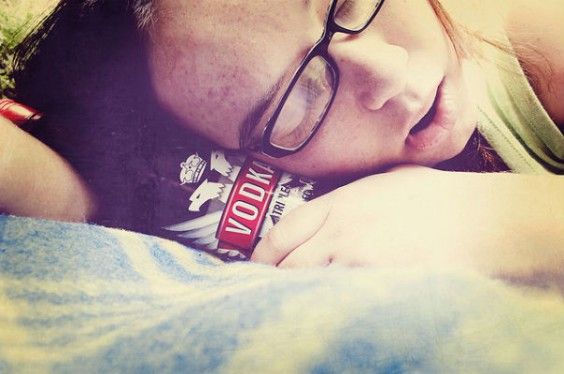
vodka mouthwashPhoto by -mrsraggle-

Any case of bad breath can be helped by a shot of vodka. The high alcohol content in vodka (and other alcohols) helps kill bad odor bacterias. Two pro tips: make sure to spit it out after use, and don't use any liquors with high sugar content, as they can eat away at all that healthy enamel.

3. Become a genius.

beer brainsPhoto by veteze.com

Alright, you got us. Drinking is definitely not going to turn us into lil' Einsteins, but alcohol does help keep our brains sharp. Ethanol helps the neurons in the brain resist wear and tear that can lead to Alzheimer's and dementia later in life [2].

4. Finally finish that novel/album/painting with a creative flourish.

alcohol creativityPhoto by epeigne37

Alcohol actually (really and truly) helps us be more creative. One study found that people who drank and ate during a problem solving test performed better than their sober counterparts. The study was necessarily limited, and alcohol can certainly have detrimental effects on brain functions when confused in excess. A little inebriation could get the juices flowing, but don't chug an entire handle of vodka in hopes of painting the next Mona Lisa.

5. Look younger, longer.

look youngerPhoto by bill barber

Drinking is not known for helping people look their best, but the special antioxidants in wine (such as phytochemicals and resveratol) can increase energy levels and combat signs of aging.

6. We're going to live forever!

champagne toastPhoto by The Infamous.

Well, no. But one study found that drinking a moderate amount of red wine helped increase life span by inducing longevity genes. [Note: This study was conducted on mice with highly concentrated values of resveratol, the supercharged antioxidant naturally found in red wine.]

7. Get good cholesterol (for a change).

cholesterol catsPhoto by ambergris

Red wine is the superhero here. Alcoholic beverages, and wine especially, are credited with increasing "good," HDL cholesterol levels. HDL helps clean the body by removing LDL, or "bad," cholesterol.

8. Soothe a sore throat.

whiskey sore throatPhoto by Paul David Gibson

Not much of a voice to shout over that thumping bar music? Order another whiskey. Gargling some whiskey, combined with a spoonful of warm water, can help ease pain by numbing the throat. As with the mouthwash, make sure you don't swallow the dose. We want to feel better, not get smashed by accident.

9. Get over a malaria infection!

malaria tonic waterPhoto by Celia Hippie

Granted, malaria is not a going concern for the Western world, but the tonic (in gin and tonics) has historically been used to treat malarial infections. Tonic contains quinine, an alkaloid that also has anti-inflammatory and analgesic properties. Much more effective solutions have been developed, but quinine (and tonic water) can still help in a pinch before proper medication can be administered [3].

10. Fight off the stomach butterflies.

stomach butterfliesPhoto by alexeyklyukin

Alcohol is the great uninhibitor, lubricating social interactions and making awkward situations a little less anxiety-inducing. Consuming alcohol can help us feel like we fit in at parties and temporarily boost confidence (see also: "liquid courage") [4]. The flip side, however, is that using alcohol as a social crutch can lead to long term physical and mental health concerns. Much like with opening our creativity, it's important to limit alcohol consumption to recommended averages with the goal being to squelch those stomach butterflies without glass in hand.

11. Outrun the common cold in style.

common cold catPhoto by Watchcaddy

Cold season is fast approaching, so start drinking (in moderation). Two studies found that drinking alcohol was able to mediate the risk of getting a common cold. (Sorry, no studies suggest that drinking while sick will actually help.) One study found that moderate drinkers had a higher resistance to colds, while another out of Spain found that people who drank eight to 14 glasses wine — particularly red — was linked to as much as a 60 percent risk of developing a cold.

What do you think: is alcohol a force for good (health)? Let us know in the comments below or tweet Zachary @zsniderman.

7
About the Author
Zachary Sniderman
Hey there - I'm the editorial director at Greatist. Before joining the (crazy good) team here, I worked at Vanity Fair and at Mashable, where I...

Works Cited

  1. Moderate drinking? Alcohol consumption significantly decreases neurogenesis in the adult hippocampus. Anderson, M.L., Nokia, M.S., Govindaraju, K.P., et al. Department of Neuroscience, Rutgers University/UMDNJ - Robert Wood Johnson Medical School, Piscataway, NJ. Neuroscience 2012; 224:202-9.
  2. Ethanol protects cultured neurons against amyloid-β and α-synuclein-induced synapse damage. Bate, C., Williams, A. Department of Pathology and Infectious Diseases, Royal Veterinary College, North Mymms, Herts, UK. Neuropharmacology, 2011 Dec;61(8):1406-12.
  3. Safety and efficacy of rectal compared with intramuscular quinine for the early treatment of moderately severe malaria in children: randomised clinical trial. Barennes, H., Balima-Koussoube, T., Nagot, N., et al. Center Muraz. BMJ (Clinical Research Edition), 2006 May 6;332(7549):1055-9
  4. "No alcohol, no party": An explorative study on young Danish moderate drinkers. Frederiksen, N.J., Bakke, S.L., Dalum, P. Department of Cancer Prevention and Documentation, Danish Cancer Society, Denmark. Scandinavian Journal of Public Health, 2012 Oct 1.

Comments Leave a comment

Staleek

The ethanol in alcohol?  Really?  Ethanol is a type of alcohol.  You lost me there.

 @Staleek Clarified it above, thanks Staleek.

Staleek

 @zachary snidermanGlad I could help!

GlennHurlow

Zachary, really like this site and the ethos behind it but find this article to be pretty misleading:
 
1. Healthy heart – it’s the antioxidants, also available in fresh fruit and veg, not the alcohol that deliver the benefits.
3. Reduce risk of dementia – in the Erasmus University study referred to, 2.46% of the 8 000 subjects developed dementia. With alcohol directly linked to 3.6% of cancer cases worldwide and more effective ways to reduce the risk of developing dementia, I’ll take my chances not drinking.
4. Enhance creativity – the validity of the word test used to measure creativity has been disputed by other (sober) researchers and if you are going this route then the same logic can be used to support heroin use.
5. Combat ageing – see 1 above.
6. Increase lifespan – see 1 above.
7. Lower cholesterol – rather don’t consume too much LDL in the first place.
9. Treat Malaria – it's the quinine in bitters, again not alcohol.
10. Social lubricant – the study found that high school students in Copenhagen felt more included at parties if they drank.
11. Mediate risk of contracting a cold – there is no mechanism described in the 1993 study of 391 people and this is a quote from the article referencing the second study: “The scientists suspected this had something to do with the antioxidant properties of wine.” So, see 1 above.
 
So that leaves 2 out 11 and even for those there are better options than the single most damaging drug in society today. There is nothing Great about alcohol.

@GlennHurlow Hey Glenn - absolutely solid points. Consuming too much alcohol (about one glass for women, no more than 2 for men) each day is a bad call and drastically negates any health benefits that may come from alcoholic drinks. The story is meant to show some of the unexpected health benefits that alcohol, in moderate consumption, can offer. We wrote a story a little while ago (http://greatist.com/health/health-benefits-alcohol/) that delved into the science a little deeper as well.
 
For 1, 5, 6, and 11 - it is the antioxidants in alcohol that provide these benefits, and we made sure to mention that. It's true that other foods have higher concentrations, but thankfully we're not advocating an alcohol diet. Simply saying that alcohol also contains these elements.
 
For 3 - as with the note above, it's clear that drinking alcohol won't stop dementia. Ethanol, however, in moderation, can help prevent the wear and tear. As you said, it is not the sole answer.
 
For 4 - the difference between alcohol and heroine use is the clear and obvious health differences involved. Heroine, acid, and other psychotropic drugs were massive creative influences for all sorts of artists and musicians. They are also enormously dangerous and all sorts of illegal. Alcohol, on the other hand, can be consumed safely in moderation and it is a legal substance. We also made sure to to note that alcohol should in no way be a crutch to creativity and acknowledge the detrimental effects on brain function if it is abused.
 
For 7, great advice, but this advice doesn't mitigate the effect alcohol has on LDL.
 
For 9, absolutely, and we made sure to acknowledge that from the get go. To be fair, this point might live better under a post of why "alcoholic drinks" can be healthy.
 
For 10, you're correct, that's what the study found. While more studies we're certainly be needed, the sample of students does help explain why alcohol is viewed as a social lubricant.
 
Hopefully some of these clarifications help. Drinking more than a moderate amount of alcohol can lead to serious health concerns and is not recommended for anyone under any circumstance. Instead, we tried to highlight some of the unexpected properties of alcohol for people who perhaps didn't even know that it contained antioxidants or bring to light some interesting studies associated with it. Feel free to ping me back with questions and thanks for taking the time to read through,
zack.

@GlennHurlow
 Hey Glenn - absolutely solid points. Consuming too much alcohol (about one glass for women, no more than 2 for men) each day is a bad call and drastically negates any health benefits that may come from alcoholic drinks. The story is meant to show some of the unexpected health benefits that alcohol, in moderate consumption, can offer. We wrote a story a little while ago (http://greatist.com/health/health-benefits-alcohol/) that delved into the science a little deeper as well.
 
For 1, 5, 6, and 11 - it is the antioxidants in alcohol that provide these benefits, and we made sure to mention that. It's true that other foods have higher concentrations, but thankfully we're not advocating an alcohol diet. Simply saying that alcohol also contains these elements.
 
For 3 - as with the note above, it's clear that drinking alcohol won't stop dementia. Ethanol, however, in moderation, can help prevent the wear and tear. As you said, it is not the sole answer.
 
For 4 - the difference between alcohol and heroin use is the clear and obvious health differences involved. Heroin, acid, and other psychotropic drugs were massive creative influences for all sorts of artists and musicians. They are also enormously dangerous and all sorts of illegal. Alcohol, on the other hand, can be consumed safely in moderation and it is a legal substance. We also made sure to to note that alcohol should in no way be a crutch to creativity and acknowledge the detrimental effects on brain function if it is abused.
 
For 7, great advice, but this advice doesn't mitigate the effect alcohol has on LDL.
 
For 9, absolutely, and we made sure to acknowledge that from the get go. To be fair, this point might live better under a post of why "alcoholic drinks" can be healthy.
 
For 10, you're correct, that's what the study found. While more studies we're certainly be needed, the sample of students does help explain why alcohol is viewed as a social lubricant.
 
Hopefully some of these clarifications help. Drinking more than a moderate amount of alcohol can lead to serious health concerns and is not recommended for anyone under any circumstance. Instead, we tried to highlight some of the unexpected properties of alcohol for people who perhaps didn't even know that it contained antioxidants or bring to light some interesting studies associated with it. Feel free to ping me back with questions and thanks for taking the time to read through,
zack.

GeraldHaffner

@GlennHurlow  You can not consume LDL: you consume cholesterol, and your body processes it into HDL or LDL in a regulated process. Your body needs both LDL and HDL cholesterol for different critical functions, and your body has a nice regulating mechanism. Some people however have a problem with their body's regulating system that leads them to have too much LDL in their blood, and not enough HDL to help clear it out. This will lead to big problems, like atherosclerosis.Also, there is significant evidence that consumption of cholesterol actually has very little correlation with blood lipid levels; it is only about one quarter of cholesterol in the body that is consumed, the rest is produced by the liver. In addition, increasing intake of cholesterol does not mean increasing LDL levels; in fact, depending on your body, it could very well mean an increase in HDL, meaning trying to intake more cholesterol could actually be healthier for you than limiting cholesterol intake. It is other factors that cause cholesterol imbalances in HDL and LDL levels, leading to high LDL level problems, mainly intake of saturated and trans fats, smoking, and lack of exercise.

Create new account

Latest Greatist