Greatist News examines and explains the trends and studies making headlines in fitness, health, and happiness. Check out all the news here.
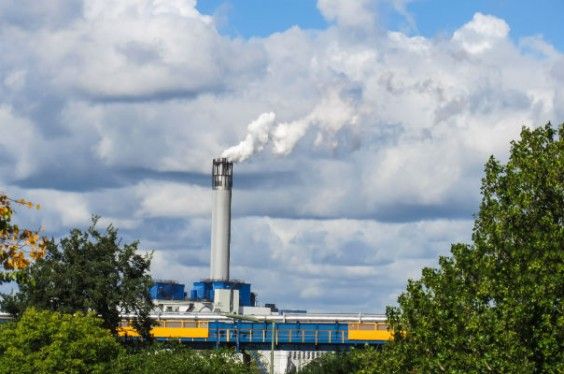
Chances are, we can all agree air pollution isn’t great for our health. And it doesn’t just affect our lungs. In fact, dirty, smoggy air has recently been added to a list of known carcinogens by The International Agency for Research on Cancer.
We’re getting down and dirty with air pollution and its new classification as a cancer-causing agent.
What’s the Deal?
Air pollution is defined as contamination both indoors and outdoors by any chemical, physical, or biological agent. Pollution certainly looks gross and can be pretty smelly (it’s also been linked to asthma and other serious health conditions) but it has just now been officially classified as an environmental factor that can cause cancer.
Carcinogens, aka substances and environmental factors that can lead to cancer, do not cause cancer in every case. Many substances (including air pollution) are only carcinogenic if a person is exposed for a certain length of time, or in a certain way (e.g. swallowing versus touching).
Researchers use five classifications to evaluate the cancer-causing potential of carcinogens. The International Agency for Research on Cancer ranks carcinogens from highest danger (Group 1: carcinogenic to humans) to lowest potential danger (Group 4: probably not carcinogenic to humans). Most of the agents in each category have been linked with only certain kinds of cancer, not all types.
The airborne particles that make up pollution were classified as “Group 1” carcinogens, meaning there’s sufficient evidence they may cause cancer in humans. Other carcinogens in Group 1 include alcoholic beverages, tobacco, asbestos, and workplace exposure as a painter or rubber manufacturer. It’s fair to say that many of us expose ourselves to dangerous carcinogens intentionally and unintentionally on a regular basis.
The “GOOD” NEWS ABOUT AIR POLLUTION
Okay, we get it. Air pollution isn’t just about our lungs. Despite the scary link to multiple cancers, there’s also some good news. The State of the Air report, compiled by the American Lung Association, shows the battle against airborne pollutants has made some serious strides. The Clean Air Act, which defines the Environmental Protection Agency’s responsibilities for protecting and improving the nation’s air quality, is predicted to prevent at least 230,000 deaths and save $2 trillion annually by 2020. And there are ways that we as individuals can protect ourselves, like checking forecasts for high air pollution days to know when to take that workout to the gym. It’s also smart to walk, bike, carpool, or use public transportation to reduce exhaust levels.
Eleven FACTS YOU MAY NOT KNOW ABOUT AIR POLLUTION
1. The most common sources of air pollution are household combustion devices (such as a gas range or furnace), motor vehicles, industrial facilities, and forest fires.
2. Pollution in China can alter the weather in the U.S. In just five days, the jet stream is able to carry heavy air pollution from China to the states.
3. People who live in places with high levels of air pollutants have a 20 percent higher risk of death from lung cancer than those who live in less-polluted places.
4. Pakistan’s air pollution is nearly 10 times greater than levels considered safe by the World Health Organization. The average car in Pakistan emits 25 percent more carbon than the average car in the U.S.
5. Air pollution hovers at unhealthy levels in nearly every major city in the world.
6. Mongolia is the world’s most polluted country (with an air pollution level 14 times higher than the World Health Organization’s standard threat level), and is home to Ulaanbaatar, one of the world’s most polluted cities.
7. Children are more susceptible to air pollution than adults because they breathe even more air per pound of body weight (The average adult sucks in over 3,000 gallons of air every day.).
8. On average, air pollution takes one to two years off the typical human life span.
9. It’s not all about planes, trains, and automobiles. Volcanoes and methane gas from animal waste also contribute to air pollution.
10. Pollution can negatively affect our hearts. A study from the American Heart Association links cardiac arrests to high levels of ozone and air pollution.
11. Dirty air has also been associated with incidences of bladder cancer.
Bottom line, air pollution can be seriously bad for our health. The best way to deal? It helps, even if just a little, to be conscious of our own carbon footprint. Rather than contributing to air pollution, each of us can work to help reduce its effects on our communities and future generations.
What do you have to say about air pollution? Let us know in the comment section below or find the author on Twitter @nicmcdermott.
