Having a positive outlook may not always be easy, but it's probably worth it. Learn how and why we should be optimists — and how looking on the bright side may benefit our health and wellbeing.
Are Hot Workouts Safe?
Squeezing any physical activity into a hectic schedule is commendable, but does a toasty warm environment make a difference? Before attempting to maintain a solid dumbbell grip with sweaty palms or slip-‘n-slide down a sopping yoga mat, find out whether hot workouts are worth wringing your clothes out for.
Illustration by Shannon OrcuttSome Like It Hot — Why It Matters
To up the ante on their sweat quotient, exercisers can choose to take their workout to a hotbox. Some gyms now offer 80-100 degree versions of popular group fitness classes, from hot Pilates and hot Barre, to slightly steamier versions of indoor cycling classes, and TRX (suspension and bodyweight exercises taken from Navy SEAL training).
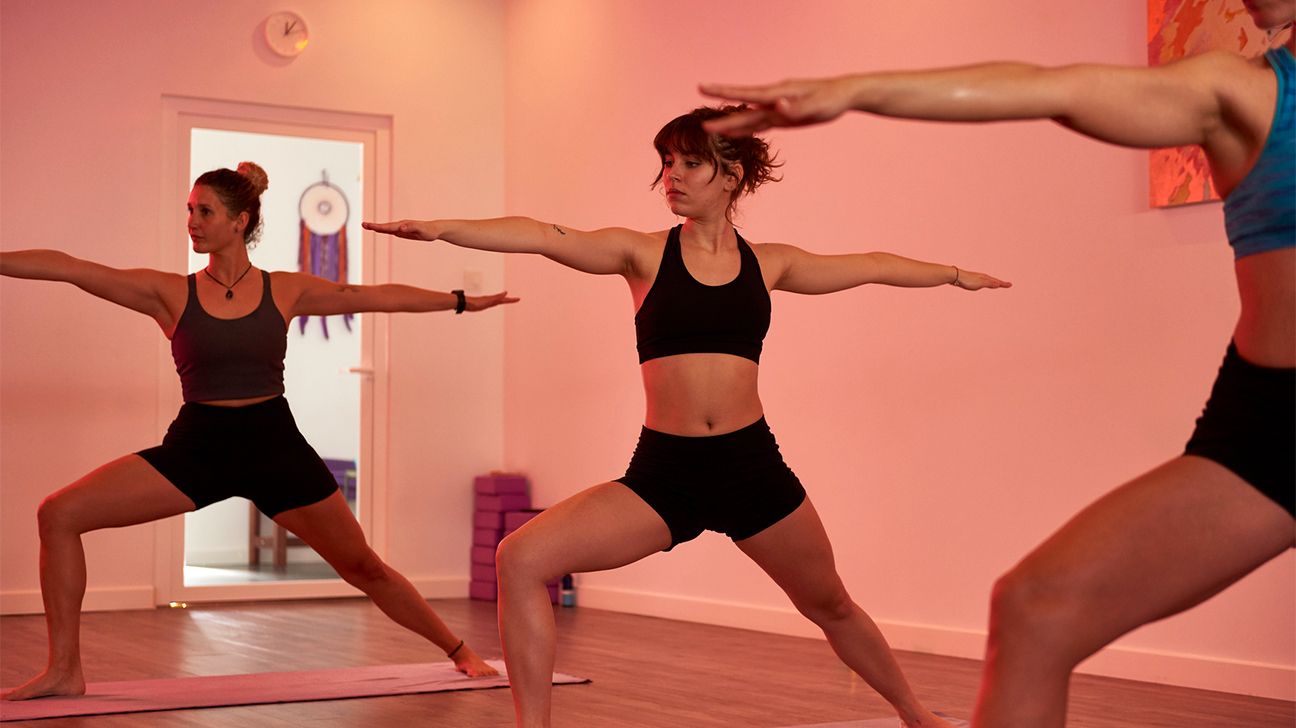
Over three decades ago, Bikram Choudhury had the hot idea to practice yoga in higher temps. Now there are over 600 Bikram studios in the U.S. alone. For the 90-minute class, an instructor runs through a series of postures performed in intense heat (105 degrees) and 40 percent humidity. That’s on the low end of what a sauna feels like. Note: We don’t suggest fully disrobing in a hot class simply because it feels like a sauna.
Not all hot workouts are technically “hot.” Mimi Benz, president and founder of The Sweat Shoppe (an indoor cycling studio in North Hollywood) offers warm spin classes, where temps never rise above 82 degrees. Still too sticky? The difference, Benz says, is the safety risks of training in these temps are relatively low compared to environments above 90 degrees. In a 75-90 degree environment, as the body’s internal temperature rises, the heart beats about 10 beats per minute faster than normal. Higher than 90 degrees — the heart beats even faster.
Taking a workout to a hotter place can change the way the heart pumps. “Your heart has to work harder for blood to pump to the working muscles,” says Dr. Santiago Lorenzo, an Olympic decathlete and post-doctoral fellow at the Institute for Exercise and Environmental Medicine [1].
To regulate body temperature, the body sweats more in high heat, and consequently loses nutrients and minerals. “Sweating promotes detoxification and elimination through the skin, which is the body's largest eliminating organ,” Benz says [2]. But other experts believe the main function of sweating is simply to cool down, and extra sweat may impair natural detox function by the liver and kidneys. Since we don’t often choose to be locked up in an armpit of a room, our bodies are forced to adapt. “An external load like excessive heat can definitely be dangerous to an unconditioned individual as it increases the stress to beyond a level that they’re prepared to handle,” says Greatist Expert Kelvin Gary.
In the Hot Seat — The Answer/Debate
Studies show that there may be some negatives to heating up. Elevated temps may make heat-sensitive medical conditions worse, and increase risk for heat injury, which can range from mild cramps to a life-threatening heat stroke [3]. Heat exhaustion — which includes symptoms such as nausea, vomiting, headache, dizziness, weakness, and fainting — is more likely to occur as core temperature rises, says Greatist Expert Robynn Europe.
While heat may add a level of risk to exercise, it may also offer some benefits (though research is somewhat limited). In one study, elite cyclists who hit a chilled space after acclimating to a 104-degree lab, showed improvements in performance by 4-8 percent [4]. The study’s head researcher, Dr. Santiago Lorenzo believes working out in high heat can be safe because of peoples’ ability to adapt to elevated temperatures [5]. But, he cautions to stay hydrated (see specific recommendations below), and listen to your body. If the heat becomes unbearable, Lorenzo says to slow the pace, cool down, and stretch.
Confinement to a hot room may not be for everyone. People with high blood pressure should take caution before heading for the heat, and same goes for pregnant women (whose internal temps should not exceed 102 degrees).
A final word of caution: Since some of these studies examine only elite athletes, researchers can’t promise the same adaptation ability for recreational exercisers. With plenty of variables to consider — fitness level, hydration status, exercise intensity, and length of exposure to the heat, more studies are needed to know how effective it can be as a training method. Moral of the story: Try it out, but bring a sweatband and drink plenty of water beforehand. The key to staying hydrated: Drink frequently and early, before you have a chance to feel thirsty during exercise. The American Council on Exercise recommends consuming fluids at regular intervals throughout the day, and sipping 17-20 ounces of water at least two hours before any hot class.
As far as gear goes, wear lightweight, breathable clothing so the body can properly cool down, and hit the scale before and after a workout. A weight loss of two percent of your total body weight or greater can be a sign of dehydration (that’s three pounds for a 150-pound person). And if you tend to get dizzy in the hot stuff (baby, this evening), or dehydrated quickly, check with your doc before trying that first hot sesh.
Which hot workouts have you tried? Tell us in the comments below.
This post has been expert approved by the following experts
Works Cited
- Blood flow distribution within skeletal muscle during exercise in the presence of chronic heart failure: effect of milrinone. Drexler, H., Faude, F., Hoing, S., et al. Medizinische Klinik III, University of Freiburg, F.R.G. The Journal of Circulation, 1987 Dec;76(6):1344-52.⤴
- Arsenic, cadmium, lead, and mercury in sweat: a systematic review. Sears, M.E., Kerr, K. J., Bray, R.I. Children’s Hospital of Eastern Ontario Research Institute, Ottawa, ON, Canada. Journal of Environmental Public Health, Epub 2012 Feb 22.⤴
- Yoga and pilates in the management of low back pain. Sorosky, S., Stilp, S., Akuthota, V., et al. Current Reviews in Musculoskeletal Medicine. 2008 March; 1(1):39-47.⤴
- Heat acclimation improves exercise performance. Lorenzo, S., Halliwill, J.R., Sawka, M.N. et al. Department of Human Physiology, University of Oregon, Eugene, OR. The Journal of Applied Physiology, 2010, Oct; 109(4):1140-7.⤴
- Effects of endurance training and heat acclimation on psychological strain in exercising men wearing protective clothing. Aoyagi, Y., McLellan, T.M., Shephard, R.J. Graduate Department of Community Health, University of Toronto, Ontario, Canada. Ergonomics, 1998 Mar;41(3):328-57.⤴


Comments Leave a comment
I personally would never try and increase the temperature of my body whilst I'm doing any sort of workout. It just causes dehydration, and I doubt the extra heart pump will do anything but make you tired sooner.
In fact, I would suggest exercise in a cold environment, the cold will definitely increase calorie burn. Hence why weight loss people take ice baths.
You left out a couple of important factors in training at higher temperatures. For a given effort, heart rate increases but does not translate to a greater calorie burn (contrary to what some people might think). This means that when the temperature is higher than usual, one must train at a lower intensity to avoid overheating (though heart rate will still remain high). Power output drops, and as a result, training stimulus drops and caloric burn is reduced. Ignore what your HR monitor says about your calories burned - it doesn't know the difference and will give faulty "calories burned" totals in elevated temperatures. (Actually, the stated calories burned on HR monitors or cardio machines is almost always faulty, but that's another topic...)Elite athletes understand that they can't train as intensly as they might need to when temperatures exceed a certain level. When training in hotter environments, they will avoid the higher temps at all costs; they train at 4am, or train indoors, or if they must run/ride/train outdoors in the heat, they will move their training schedule around to avoid the higher intensity workout, and that particular workout becomes more of an endurance or recovery effort in lower training zone (as measured by power output or pace).What does this mean for the casual exerciser going to a heated indoor cycling class "on purpose"? It means that you are doing yourself a disservice. Your power output will be necessarily decreased, despite what your monitor tells you about your HR. Over time, you will have much lower gains in overall fitness. Why do this to yourself on purpose? Stay cool as much as possible and you will give your body a much greater chance to improve strength, aerobic endurance, muscular endurance, lactate threshold, anaerobic endurance, aerobic capacity, anaerobic capacity and power. This will result in much greater fitness gains and a greater number of calories burned.
Excessive sweating was disproven years ago to not equate to increased fitness or effort or to lasting weight loss. Anyone who claims it does has not learned their exercise physiology.For the studios that say their cycling rooms "never rise above 82 degrees", that is doubtful. That is the STARTING ambient temp of the room. Put a bunch of hot sweaty bodies working hard and the temp will surely rise to potentially dangerous levels, especially if there is higher humidity. My studio starts at 68-70 degrees which is the ACSM recommended temp for cardiovascular fitness studios, and it easily rises to low 80's when the room is full - even with fans.Indoor cycling in heated rooms is dangerous and irresponsible. I'm shocked that facilities aren't leery of the liability they are creating. There are hundreds, even thousands of studies that have proven the dangers of training in the heat. The family of the first person that dies from heat related problems in an overly heated cycling studio will very easily win a wrongful death suit, because a good lawyer will have access to a plethora of studies that clearly spell out the danger, and to expert witnesses that specialize in heat related illnesses.As leaders in the fitness industry (studio and club owners, coaches, instructors, etc) we have a responsibility to our clients/students to do what's right. Increasing the heat in the cardio room* does not benefit them, and it puts them at risk. It is not the right thing to do.(* this discussion is about cardiovascular exercise, which raises internal body temperature. I'm not speaking about yoga or static weight training in the heat.)I wrote a blog post on this subject last year. http://www.indoorcyclingassociation.com/blog/?p=741 Jennifer SageMaster Instructor, FounderIndoor Cycling Association
You left out a couple of important factors in training at higher temperatures. For a given effort, heart rate increases but does not translate to a greater calorie burn (contrary to what some people might think). This means that when the temperature is higher than usual, one must train at a lower intensity to avoid overheating (though heart rate will still remain high). Power output drops, and as a result, training stimulus drops and caloric burn is reduced. Ignore what your HR monitor says about your calories burned - it doesn't know the difference and will give faulty "calories burned" totals in elevated temperatures. (Actually, the stated calories burned on HR monitors or cardio machines is almost always faulty, but that's another topic...)
Elite athletes understand that they can't train as intensely as they might need to when temperatures exceed a certain level. When training in hotter environments, they will avoid the higher temps at all costs; they train at 4am, or train indoors, or if they must run/ride/train outdoors in the heat, they will move their training schedule around to avoid the higher intensity workout, and that particular workout becomes more of an endurance or recovery effort in lower training zone (as measured by power output or pace).
What does this mean for the casual exerciser going to a heated indoor cycling class "on purpose"? It means that you are doing yourself a disservice. Your power output will be necessarily decreased, despite what your monitor tells you about your HR. Over time, you will have much lower gains in overall fitness. Why do this to yourself on purpose? Stay cool as much as possible and you will give your body a much greater chance to improve strength, aerobic endurance, muscular endurance, lactate threshold, anaerobic endurance, aerobic capacity, anaerobic capacity and power. This will result in much greater fitness gains and a greater number of calories burned.
Excessive sweating was disproven years ago to not equate to increased fitness or effort or to lasting weight loss. Anyone who claims it does has not learned their exercise physiology.
For the studios that say their cycling rooms "never rise above 82 degrees", that is doubtful. That is the STARTING ambient temp of the room. Put a bunch of hot sweaty bodies working hard and the temp will surely rise to potentially dangerous levels, especially if there is higher humidity. My studio starts at 68-70 degrees which is the ACSM recommended temp for cardiovascular fitness studios, and it easily rises to low 80's when the room is full - even with fans. Indoor cycling in heated rooms is dangerous and irresponsible.
I'm shocked that facilities aren't leery of the liability they are creating. There are hundreds, even thousands of studies that have proven the dangers of training in the heat. The family of the first person that dies from heat related problems in an overly heated cycling studio will very easily win a wrongful death suit, because a good lawyer will have access to a plethora of studies that clearly spell out the danger, and to expert witnesses that specialize in heat related illnesses.
As leaders in the fitness industry (studio and club owners, coaches, instructors, etc) we have a responsibility to our clients/students to do what's right. Increasing the heat in the cardio room* does not benefit them, and it puts them at risk. It is not the right thing to do. (* this discussion is about cardiovascular exercise, which raises internal body temperature. I'm not speaking about yoga or static weight training in the heat.)
I wrote a blog post on this subject last year. http://www.indoorcyclingassociation.com/blog/?p=741
Jennifer Sage
Master Instructor, Founder
Indoor Cycling Association
I have taken hot yoga and have to say I liked it more than I thought I would. But I like Vinyasa Yoga the best. (And as a runner,I have to disagree with the ice bath comment - I have taken ice baths only after long runs of 20+ miles. It was NEVER to burn more calories. It was to decrease inflammation and aid in recovery, which it did. Besides, why would I want to burn MORE calories after running 20+ miles?
I tried yoga in a 90 degree room recently. It was too uncomfortable to be enjoyable. I could tell I was dehydrated half way through the class and consequently left with a headache. I get heat exhaustion quite easily, so I'll be sticking to cooler room temperatures.
I definitely feel very uncomfortable exercising in high temperature & moderately high humidity (typical of an Asian or tropical island place). I also notice I cannot exert myself as much in the heat. So I'd trade speed walking or walking in the snow any day!
I've been doing hot yoga for the past 4 months and I love it! my body is toned, my skin is clean, my endurance has improved. I started with a Yin yoga class( to get used to the heat), then tried Hot Yoga Barre (great to shed inches and tone), and finally Hot Yoga.
I now take all three classes during any given week. Heat can be a challenge at first but the body gets used to it and makes exercising with no heat even easier. I highly recommend it to anyone trying to get in better shape, it's fun and it works.